Amy Stephens
MS, RDN, CSSD, CEDS
Licensed dietitian
specializing in sports nutrition
and eating disorders
MS, RDN, CSSD, CEDS
Licensed dietitian
specializing in sports nutrition
and eating disorders
If you’ve ever been told your iron levels are normal but you still feel fatigued, your ferritin might tell a different story. Ferritin is an important blood marker that indicates your iron stores, and for athletes, “normal” isn’t necessarily optimal for performance. Normal levels may be adequate but if you are an athlete, higher ranges are important to optimize performance.
Ferritin is important for oxygen transport, energy production, recovery, and endurance performance. All of which are essential for athletes trying to achieve peak performance. When ferritin levels drop, symptoms such as fatigue, dizziness, and low energy might occur, none of which will help you perform or feel your best.
So, what ferritin target is considered safe, evidence-based, and performance-focused? The answer depends on the athlete, training block, symptoms, sport, age, and overall health of the athlete. This blog will review the latest research on ferritin levels and how to determine the best target for you.

Ferritin levels are especially important for these groups:
Iron plays a key role in:
Low ferritin, even without anemia, can lead to:
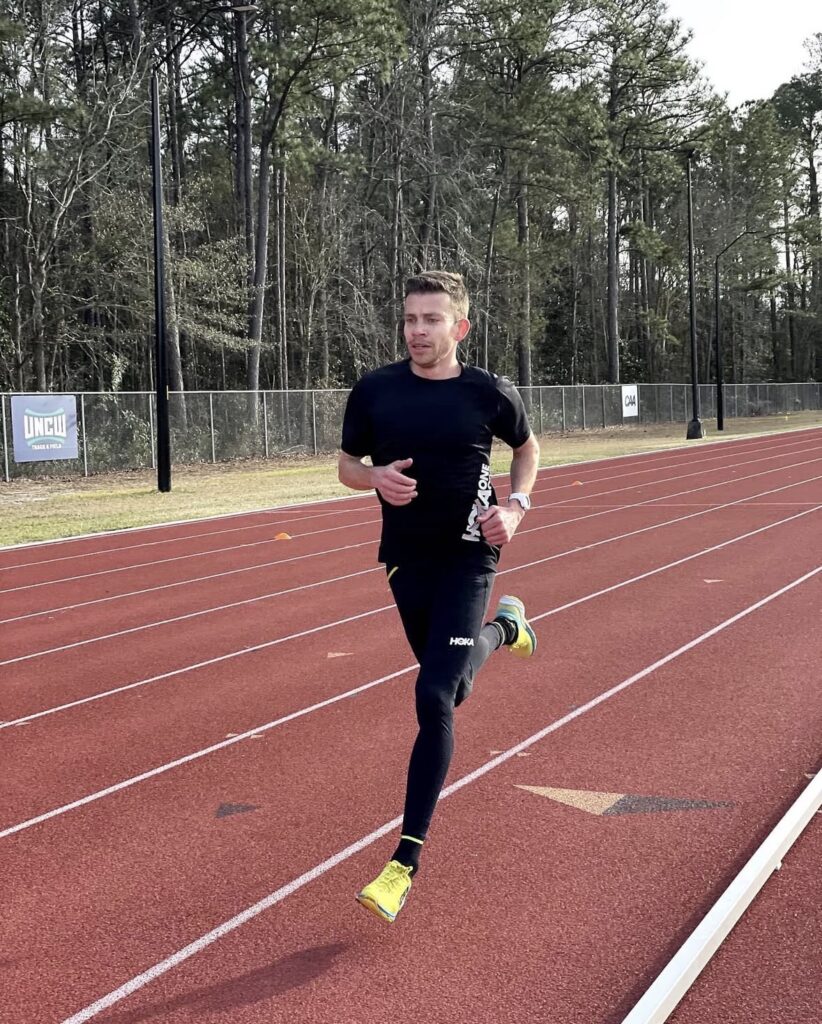
Most lab reference ranges are built to detect disease, not optimize sport performance. It is common for a lab to list a reference range of ferritin of 10–150 ng/mL as “normal” for women or 20–300 ng/mL for men. That does not mean a ferritin of 12 is ideal for an athlete training for a competition, especially an endurance athlete.
Research has shown that athletes with low ferritin, even without anemia, can experience reduced training adaptation, fatigue, and poorer endurance outcomes. Hinton et al. (2000) found iron supplementation improved endurance in iron-depleted nonanemic women. DellaValle & Haas (2011) found improved energetic efficiency in iron-depleted female rowers after supplementation.
Think of ferritin like your body’s iron fuel tank. When levels drop low (often below 35 μg/L), it’s like your gas light turning on that indicates low levels. Your body needs more iron to function at its best. Peeling et al. developed a classification system for iron depletion that is discussed in this blog post.
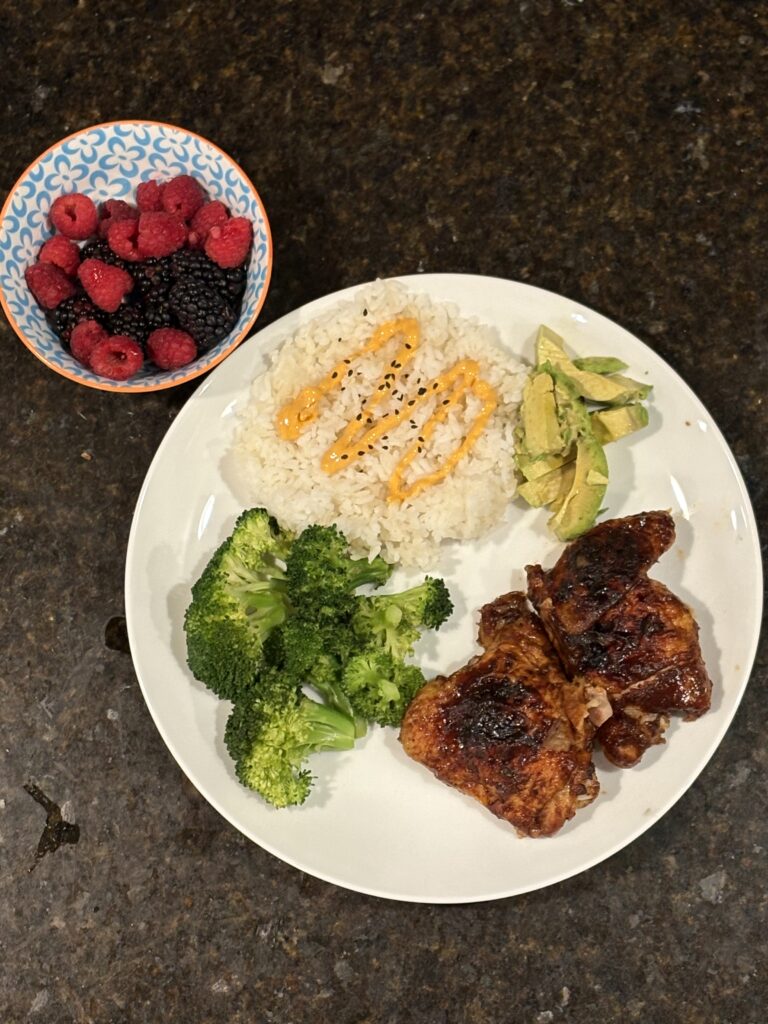
Over the course of a training block or season, the demand for iron increases. If the athlete is unable to take in enough iron-rich foods to meet higher requirements, drops in ferritin can occur. Certain types of athletes are at a greater risk for lower ferritin levels during a heavy or intense training block and should be more closely monitored. In my practice, I recommend checking levels before training begins to obtain a baseline. Allow for plenty of time to restore iron levels if the numbers are indicating deficiency. It can take 8-12 weeks to restore iron levels. These high-risk athletes include:


Over the past few years, there have been several studies and review articles that support higher ferritin levels for athletes. These levels are associated with improved performance and overall health.
Ferritin <20 ng/mL: Deficient
This level is commonly associated with depleted iron stores and increased likelihood of symptoms such as:
Most sports practitioners would consider this a clear area for intervention with supplementation and dietary changes.
Ferritin 20–30 ng/mL: Low Stores
This may still be “normal” on some lab reports, but for athletes it is often suboptimal, especially in women, endurance athletes, or those with symptoms.
The 2019 narrative review by Sim et al. emphasized that iron deficiency can impair adaptation and performance before anemia sets in.
At this stage, treatment with iron rich foods and discussion with your physician or medical provider is warranted.
Ferritin 30–50 ng/mL: Adequate
For general health, many athletes function adequately here. But during altitude camps, intense endurance training blocks, or growth phases, this may not provide much reserve.
It will be beneficial to target a higher level if training at altitude or at the start of a heavy training block such as the start of a season or marathon training cycle.
Ferritin 50–100 ng/mL: Likely Target Range
For the most competitive athletes, especially endurance athletes, this is the best range to support energy, recovery, and training (Solberg, 2023).
Athletes in this range often have better resilience during training blocks, travel, altitude exposure, and race season.
Ferritin >100 ng/mL: Not Enough Data to Support this Level
Higher ferritin can occur naturally, but more is not always better. Ferritin is also an inflammatory marker, meaning it can rise with illness, stress, infection, or tissue damage.
Excess iron can be harmful.
Ferritin should not be interpreted alone. It should be reviewed by a healthcare provider along with CBC, hemoglobin, iron studies, symptoms, menstrual history, fueling, overall health and training load. Ferritin can also rise with inflammation or illness. Measuring a ferritin level does not provide the full picture of an athlete’s health status. It’s best to allow a medical provider to evaluate ferritin levels along with other labs and health metrics to assess the best treatment plan.
Ferritin Level | Category | What It Means | What to Do |
20–30 ng/mL | Low Stores | May be considered “normal” on labs, but often suboptimal for athletes. Can impact performance and adaptation even before anemia develops (Sim et al., 2019). | Increase iron-rich foods and consult a healthcare provider. Monitor closely. |
30–50 ng/mL | Adequate | Sufficient for athletes, but may not provide enough reserve for intense training, altitude, or high growth phases. | Maintain iron intake from food, but consider targeting higher levels during heavy training blocks. |
50–100 ng/mL | Target Range | Optimal for highly competitive athletes, supporting energy, recovery, and performance (Solberg, 2023). | Maintain with consistent fueling and monitoring, especially during season. |
>100 ng/mL | High | Not necessarily beneficial. Can reflect inflammation, illness, or stress rather than improved iron status. | Avoid unnecessary supplementation. Evaluate with a healthcare provider. |
Teens often need a more individualized ferritin target than adults because growth, increased blood volume, muscle development, menstruation, and sports training can all raise iron needs. A ferritin level considered “normal” for the general population may be less than ideal for a teen athlete.
Here is the framework for the frequency of iron blood screening in athlete populations. The goal is to catch low iron levels early before it affects performance and overall health.

This figure has been adapted from Sim et. al.
Not without lab work and professional guidance. Iron supplements can cause stomach distress and excess iron can be dangerous. Intravenous iron should only be medically supervised and recommended by a healthcare provider. Studies such as Garvican et al. (2014) and Peeling et al. (2009) examined these approaches in select athletes, not as casual wellness strategies.
It’s essential for the athlete to consume enough food in order to meet daily nutrition and iron requirements. Supplementation can be helpful but does not solve the underfueling issue and low iron levels can persist. |
For athletes with borderline or mildly low ferritin, improving dietary iron intake is the first strategy.
Sometimes food is not enough to help restore ferritin levels. Speak with your doctor to determine if you need iron supplementation.
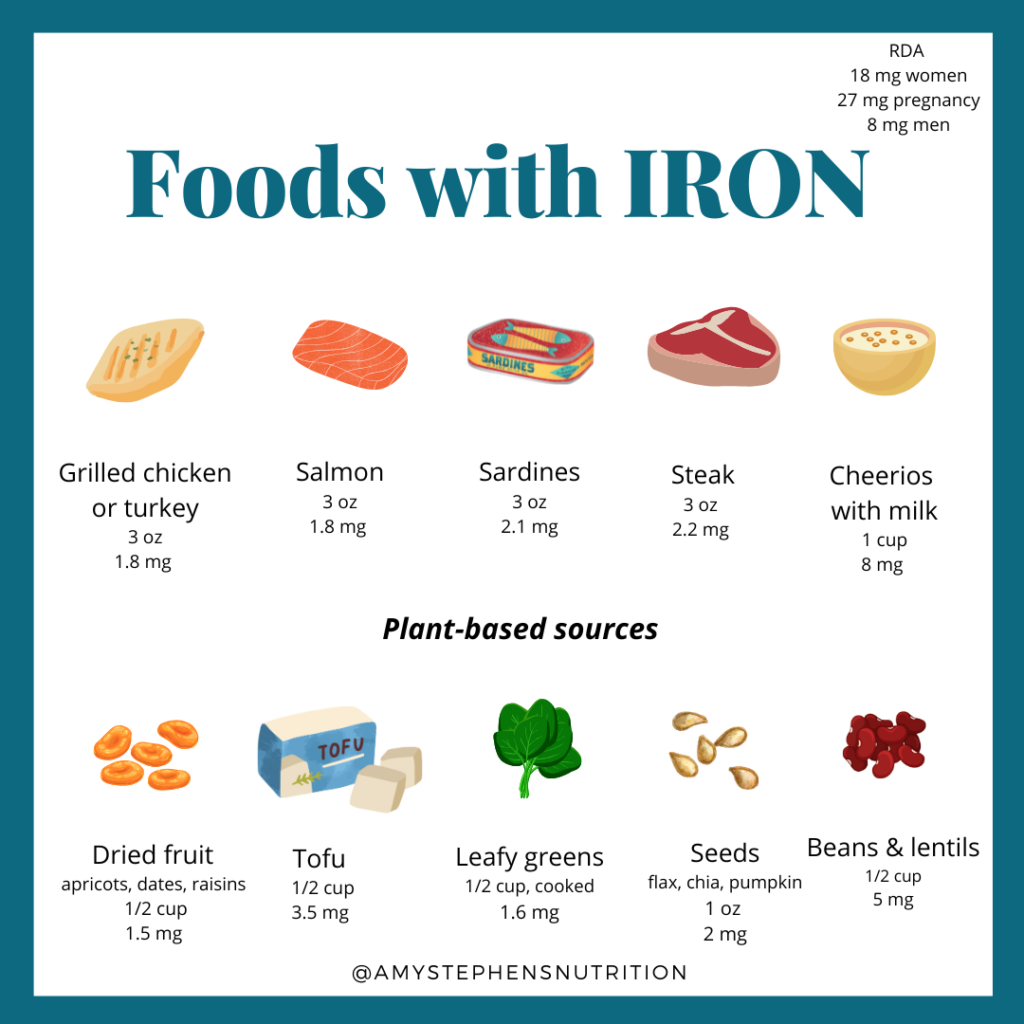
Normal ferritin levels are often the difference between feeling strong in training and constantly running on empty. If you’re dealing with unexplained fatigue, slower recovery, or a performance plateau, it’s worth taking a closer look at your iron status rather than brushing it off. The key is being proactive: get baseline labs before a heavy training block, fuel consistently with iron-rich foods with vitamin C, and don’t wait until you feel run down to act. These habits can keep up iron levels and help athletes reach their performance goals.
DellaValle, D. M., & Haas, J. D. (2011). Iron supplementation improves energetic efficiency in iron-depleted female rowers. Medicine & Science in Sports & Exercise, 43(6), 1205–1215. https://doi.org/10.1249/MSS.0b013e318206f3c0
Garvican, L. A., Saunders, P. U., Cardoso, T., Macdougall, I. C., Lobigs, L. M., Fazakerley, R., Fallon, K., Anderson, B., Anson, J. M., & Gore, C. J. (2014). Intravenous iron supplementation in distance runners with low or suboptimal ferritin. Medicine & Science in Sports & Exercise, 46(2), 376–385. https://doi.org/10.1249/MSS.0b013e3182a535c2
Hinton, P. S., Giordano, C., Brownlie, T., & Haas, J. D. (2000). Iron supplementation improves endurance after training in iron-depleted, nonanemic women. Journal of Applied Physiology, 88(3), 1103–1111. https://doi.org/10.1152/jappl.2000.88.3.1103
McClung, J. P., Karl, J. P., Cable, S. J., Williams, K. W., Nindl, B. C., Young, A. J., & Lieberman, H. R. (2013). Iron status and the acute post-exercise hepcidin response in athletes. PLOS ONE, 8(3), e58002. https://doi.org/10.1371/journal.pone.0058002
Peeling, P., Blee, T., Goodman, C., Dawson, B., Claydon, G., Beilby, J., & Prins, A. (2009). Effect of iron injections on aerobic-exercise performance of iron-depleted female athletes. International Journal of Sport Nutrition and Exercise Metabolism, 19(6), 579–592. https://doi.org/10.1123/ijsnem.19.6.579
Röcker, L., Haller, D., & Konig, D. (2002). Serum ferritin concentrations and aerobic performance in elite athletes. International Journal of Sports Medicine, 23(5), 355–359. https://doi.org/10.1055/s-2002-33736
Sim, M., Garvican-Lewis, L. A., Cox, G. R., Govus, A., McKay, A. K. A., Stellingwerff, T., & Peeling, P. (2019). Iron considerations for the athlete: A narrative review. European Journal of Applied Physiology, 119(7), 1463–1478. https://doi.org/10.1007/s00421-019-04157-y
Solberg A, Reikvam H. Iron Status and Physical Performance in Athletes. Life (Basel). 2023 Oct 2;13(10):2007. doi: 10.3390/life13102007. Erratum in: Life (Basel). 2025 Dec 30;16(1):56. doi: 10.3390/life16010056. PMID: 37895389; PMCID: PMC10608302.
Zhao, X., et al. (2025). Effect of baseline ferritin levels on post-exercise iron metabolism in elite youth rowers. Scientific Reports. https://doi.org/10.1038/s41598-025-07682-3