Amy Stephens
MS, RDN, CSSD, CEDS
Licensed dietitian
specializing in sports nutrition
and eating disorders
MS, RDN, CSSD, CEDS
Licensed dietitian
specializing in sports nutrition
and eating disorders
In early 2026, a viral social media post claimed that a “Harvard and Mayo Clinic study” found eating a Dairy Queen Blizzard post-workout led to 43% higher muscle protein synthesis (MPS) compared to a traditional recovery meal like chicken and rice. The claim spread quickly across Instagram and Facebook, often framed as permission to ditch “boring” recovery foods in favor of an ice cream dessert. The fact that it received so much attention supports the idea that people will believe unfounded claims to rationalize eating less nutritious options.
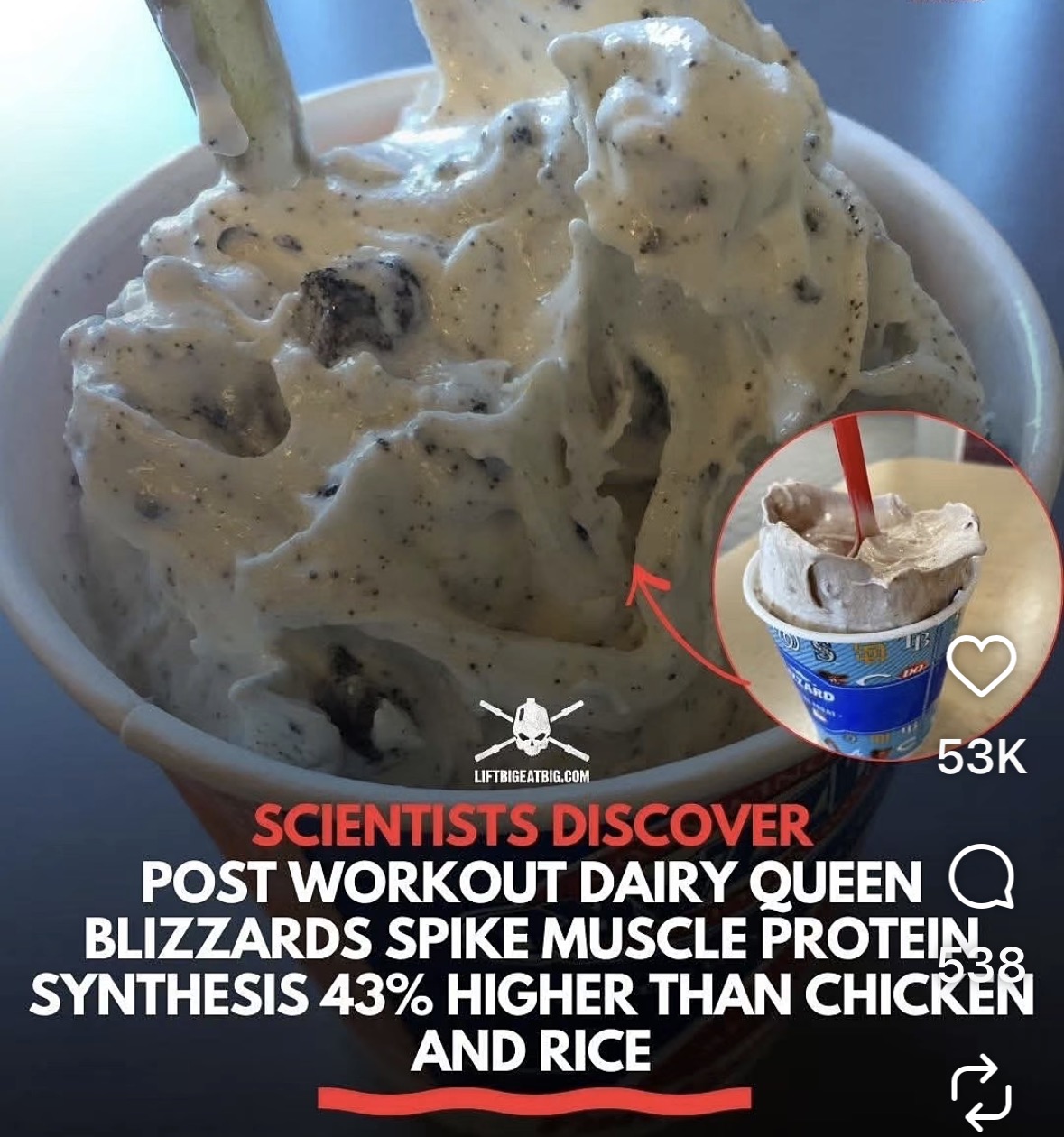
No such peer-reviewed study exists. There is no published research from Harvard, the Mayo Clinic, or any scientific journal supporting this claim. The post appears to be satirical or exaggerated content, likely intended to mock fitness culture rather than provide legitimate nutrition guidance, likely to create controversy and facilitate engagement.
The meme borrows from research-backed, real physiology. After exercise, the body benefits from:
Carbohydrates, particularly fast-digesting ones found in sugary foods, can raise insulin levels, which helps shuttle nutrients into muscle and supports recovery. However, insulin alone does not drive muscle growth. Without sufficient high-quality protein, muscle repair and adaptation are limited.
While a Blizzard contains carbohydrates, it:
Adding to the irony, Dairy Queen soft serve contains approximately 5% milk fat, which is so low that it does not meet the legal definition of ice cream in many regions. This further highlights that it is not a meaningful protein-rich recovery food.
Research consistently shows that post-exercise recovery is optimized with a combination of carbohydrates and adequate protein, not sugar or protein alone. Balanced meals, such as chicken and rice, tofu and quinoa, yogurt with fruit, or milk and cereal, provide the essential amino acids and energy needed to restore glycogen, support muscle repair, and promote long-term adaptation.
That doesn’t mean dessert is “bad” or off-limits. Enjoyment, flexibility, and food satisfaction matter. But a Blizzard is not superior to, nor a replacement for, evidence-based recovery nutrition.
When it comes to performance nutrition, there are no short-cuts. Science backed information supports fueling with plenty of nutritious foods.
Thomas, D. T., Erdman, K. A., & Burke, L. M. (2016). Position of the Academy of Nutrition and Dietetics, Dietitians of Canada, and the American College of Sports Medicine: Nutrition and athletic performance. Journal of the Academy of Nutrition and Dietetics, 116(3), 501–528.
https://doi.org/10.1016/j.jand.2015.12.006
PMID: 26920240