Amy Stephens
MS, RDN, CSSD, CEDS
Licensed dietitian
specializing in sports nutrition
and eating disorders
MS, RDN, CSSD, CEDS
Licensed dietitian
specializing in sports nutrition
and eating disorders
Training for a marathon takes a lot of time and consistency. Most runners spend months building mileage, following a plan, and dialing in their workouts. One thing that often gets overlooked is nutrition. While runners put a lot of effort into training, many are unknowingly making fueling mistakes that are completely preventable. A lot of runners don’t realize how much fueling impacts performance, but it plays a major role in both training and race day.
I’ve been working with runners for over twenty years, and these are the common mistakes made during training and while racing. Some are mistakes that I made myself during my first marathon, along with insights I’ve picked up from coaches at NY Run Academy. To make things easier, I’ve put them all together with some solutions so you can spend less time guessing and more time actually enjoying the race experience.

A lot of runners wait until they feel tired to start fueling. By then, it’s already too late and your body has used up a significant amount of glycogen.
Once glycogen stores are depleted, it’s incredibly hard to catch back up mid-run.
What to do instead:
Fuel early and often. Take your first gel within 30-45 minutes of the start. Think of fueling as the best way to prevent hitting the wall.

Fatigue, thinking about food, irritability, or a slight drop in pace are early signs that your fuel is running low which can happen during a training run or on race day.
They’re signals and it’s important to pay attention.
Your body is asking for energy long before a full crash happens, but many runners might ignore these signs and push through instead of responding (and taking some fuel).

Eating whole, nutrient-dense foods is important, but it can backfire if it leads to not eating enough.
Runners often unintentionally underfuel by:
This results in not enough energy to support training.
What to do instead:
Include a variety of foods and focus on eating enough of all nutrients.
Carbohydrates are not optional for endurance athletes. They are a key source of energy. They are quickly broken down into usable fuel, giving your muscles and heart the energy they need to keep you going during exercise.
Carbs> glucose > ATP energy
Avoiding carbs or being afraid of sugar (especially during runs) can:
What to do instead:
Carbs = energy. Carbs are not something to limit. They’re something to use strategically. Start practicing your in-run fueling and gradually increase the amount of carbs to see which amount is best for you.

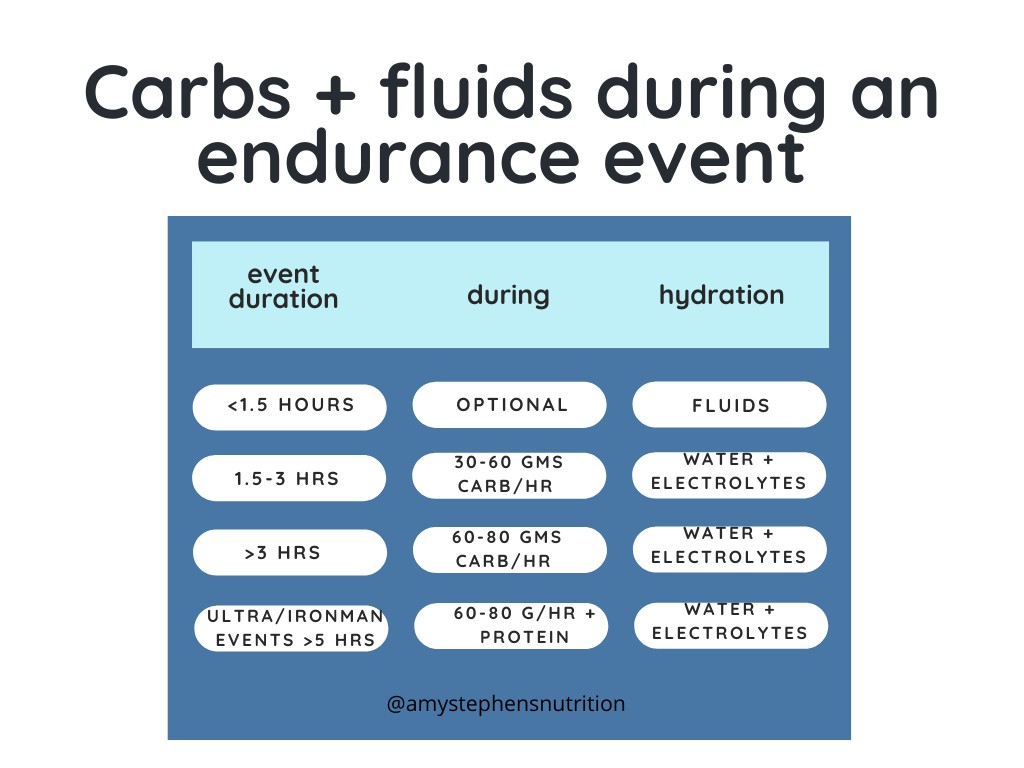
Race mornings can be unpredictable due to varied start times, nerves, and travel but many runners don’t plan for these variables.
A common issue is:
What to do instead:
Have a clear, written, practiced plan, including what you’ll eat leading up to your race or running start time.
As mileage builds, energy needs go up, but many runners keep eating the same way they did earlier in the season.
This creates a growing energy gap that shows up as:
What to do instead:
Fueling and hydration should evolve with your training.
Fluid intake should be about half of your body weight in ounces + more for sweat losses. For most people that’s about 2-3 Liters + additional fluid lost in sweat + electrolytes.
Electrolytes are minerals in your body that maintain blood pressure, muscle contraction and nerve firing. As you sweat, your body loses electrolytes through your skin. The more sweat you lose, the more electrolytes your body loses and the more you need to replenish in fluids and electrolytes. Using electrolytes is replacing what your body lost.
Signs of an electrolyte imbalance:
What to do instead:
On a training run, experiment with different electrolytes products to see how you feel. Click here for more detailed information on how to use electrolytes and which products to choose.

Gerard Connelly, Coach for NY Run Academy
My first marathon went terribly. I had classic dehydration symptoms throughout the second half. The cramping was terrible and my legs were completely dead. I ended up in the med tent afterwards. I probably drank too much water the day before and didn’t add any electrolytes. Once I got some salt back in me after the race, I felt basically fine. I sweat pretty heavily, so now I pound salt and it always helps.
Fueling your long run is important but how you eat the rest of the week supports race day, too.
What you eat throughout the week:
What to do instead:
Include a variety of foods in adequate quantities. Eat enough at meals until you feel comfortably full. This can be accomplished in three meals and up to four snacks.
Carb loading isn’t just one big pasta dinner the night before. You can’t cram carb loading like you would the night before an exam.
If you haven’t been eating enough carbs consistently, and then dramatically increase your carbohydrate intake during race week, it can lead to:
Carb loading works best when it builds on an already adequate intake.
What to do instead:
Eat enough carbohydrates daily to support training and recovery. Most endurance athletes need 6-10 grams carbohydrate per kilogram per day which is about 400-600 grams per day for a 150 pound athlete.
Think about food as part of your training plan, not separate from it. The more you run and train, the more fuel your body needs. Practice your fueling plan before and during runs. Have a clear, race day plan that takes into account your start time.